
Clear records
history record

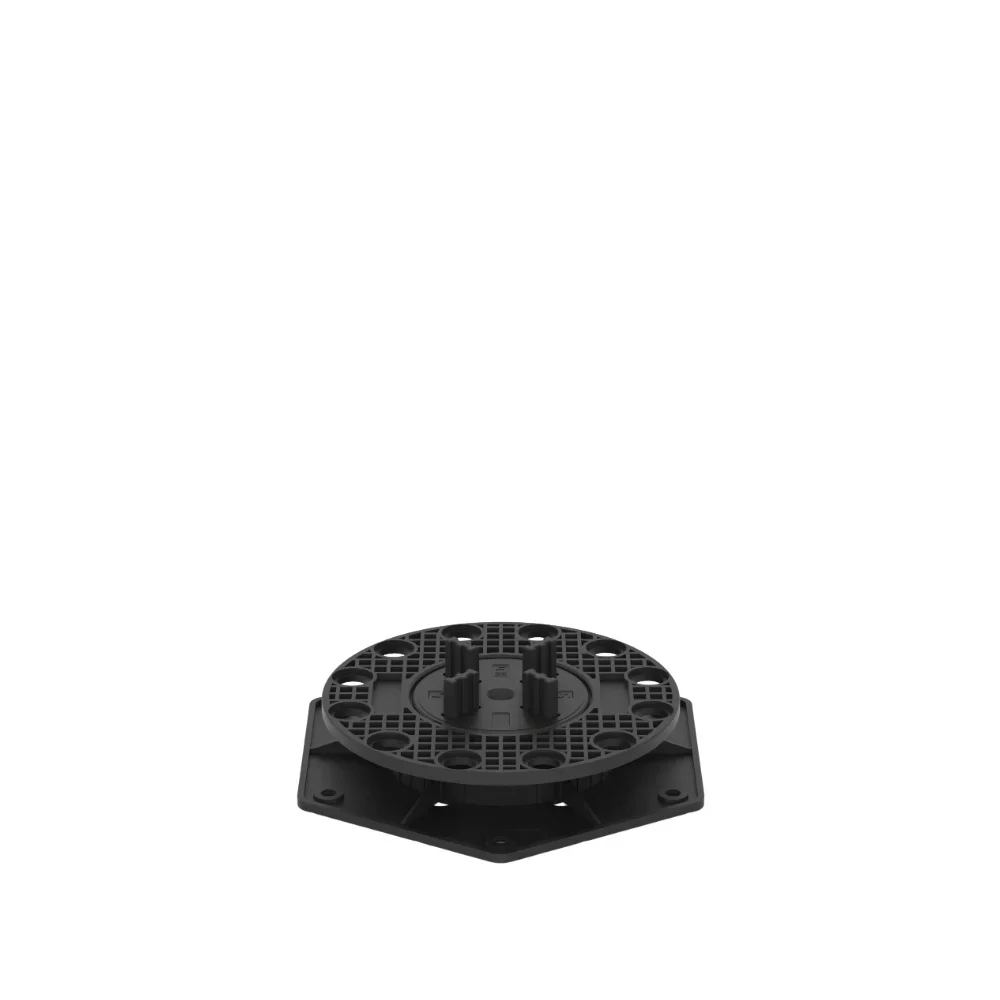
Best Decking Pedestal System Installation for Stable Outdoor Structures
Engineering Logic Behind Modern Decking Support Systems
In contemporary outdoor construction engineering, elevated decking structures are no longer treated as purely architectural finishes but as load-bearing modular systems that must maintain structural stability under long-term environmental exposure, variable load distribution, and substrate inconsistency. This shift has fundamentally changed how the Decking pedestal system installation process is designed, executed, and evaluated in commercial and residential infrastructure projects.
The system developed by Homedin Industrial is engineered specifically to address the structural uncertainty that exists in rooftop decks, terraces, podium landscapes, and irregular ground platforms. Unlike traditional mortar bedding systems that rely on rigid leveling and full-surface contact, pedestal-based systems introduce point-load distribution mechanics combined with adjustable height control, enabling precise correction of slope, drainage gradients, and substrate irregularities without extensive base reconstruction.
From a project engineering perspective, three critical constraints define system selection:
structural load transfer consistency under static and dynamic loading conditions, particularly in high-traffic commercial areas where pedestrian load concentration is non-uniform and changes over time;
installation tolerance adaptability, where base surfaces often exhibit slope deviation, waterproofing layers, or construction irregularities that cannot be corrected through conventional leveling methods without significant labor cost;
long-term settlement resistance, where soil or structural slab micro-movement can lead to progressive misalignment in rigid systems.
These constraints directly determine whether a decking support system can maintain long-term serviceability without requiring frequent corrective maintenance.
Structural Architecture of a High-Performance Pedestal System
A modern decking pedestal system is not a single component but a multi-layered load management assembly designed to transfer vertical forces while maintaining controlled elevation geometry.
The system engineered by Homedin Industrial integrates several key structural mechanisms:
Load Distribution Base Interface Design
The base of the pedestal is engineered to distribute vertical loads across a broader contact area, reducing point pressure concentration on waterproof membranes or insulation layers. This is particularly critical in rooftop applications where excessive localized stress can compromise waterproofing integrity over time, leading to latent leakage risks that are difficult to detect during early stages of installation.Precision Height Adjustment Thread Mechanism
The height adjustment system operates through a calibrated threaded structure that enables incremental vertical correction, typically within millimeter-level precision ranges. This allows installers to compensate for substrate slope variations without introducing secondary leveling materials such as mortar beds or shimming layers, which often degrade over time under thermal expansion cycles.High-Stiffness Polymer Structural Composition
The pedestal body is manufactured from high-strength engineering polymers designed to resist creep deformation under long-term static load. This ensures that vertical alignment remains stable even under continuous exposure to elevated temperatures, UV radiation, and moisture cycling, which are common in rooftop and open-air installations.Integrated Drainage Flow Clearance Geometry
The system is designed to maintain continuous void space beneath decking surfaces, enabling unobstructed water drainage. This reduces hydrostatic pressure buildup and prevents water accumulation zones that typically contribute to surface degradation and structural deterioration in traditional flat-bed installations.Anti-Creep Locking Stability Interface
Once height adjustment is completed, the locking mechanism maintains structural rigidity under load variation and vibration exposure. This is essential in environments subject to thermal expansion cycles, wind-induced vibration, or frequent pedestrian traffic.
Installation Engineering Workflow and Technical Control Points
The Decking pedestal system installation process follows a structured engineering sequence designed to ensure load stability and geometric accuracy.
Substrate Assessment and Load Path Verification
Before installation begins, engineers evaluate substrate flatness, waterproof membrane integrity, and structural load-bearing capacity. This step determines pedestal spacing density and load distribution strategy. In rooftop environments, incorrect spacing design can result in localized overloading, which accelerates long-term structural fatigue.Layout Positioning and Grid Calibration
Pedestal placement is established using a modular grid system aligned with decking module dimensions. This ensures that load transfer points correspond precisely with board joints and structural reinforcement lines, reducing torsional stress accumulation across decking surfaces.Height Calibration and Slope Compensation
Each pedestal is individually adjusted to achieve required surface slope, typically within drainage design parameters of 1–2%. This controlled gradient ensures that water runoff is directed efficiently toward drainage outlets without pooling in low-pressure zones.Decking Installation and Load Balancing Verification
After board placement, load distribution is tested across multiple contact points to confirm uniform force transfer. Any localized instability is corrected through fine-tuning pedestal height adjustments, ensuring consistent surface rigidity.Final Locking and System Stabilization Check
The system is locked into final configuration once structural equilibrium is confirmed. This ensures long-term resistance to vibration-induced loosening and settlement-driven misalignment.
Load Capacity and Structural Performance Parameters
One of the most frequently asked engineering questions is: “How much load can a decking pedestal system support?”
Load capacity is determined by three interdependent factors:
pedestal material compressive strength, which defines maximum static load resistance before deformation occurs;
load distribution geometry, which affects how force is transferred to the substrate;
installation spacing configuration, which determines load per unit support point.
In engineered systems such as those developed by Homedin Industrial, load performance is optimized for distributed structural environments where both static furniture loads and dynamic pedestrian loads must be accommodated without localized deformation.
Unlike traditional mortar bedding systems, which rely on continuous surface contact but degrade under micro-settlement, pedestal systems maintain consistent load paths even under long-term environmental cycling.
Why Traditional Installation Methods Fail in Long-Term Performance
Conventional decking installation methods, such as cement mortar bedding or fixed-height support blocks, present inherent structural limitations that become more pronounced over time:
Thermal Expansion Constraint Accumulation
Rigid systems do not accommodate dimensional changes caused by temperature fluctuations, leading to stress buildup within decking boards and eventual surface deformation or cracking.Drainage Obstruction and Water Retention Zones
Continuous base contact eliminates under-deck ventilation pathways, increasing the likelihood of trapped moisture accumulation, which accelerates material degradation and undermines waterproofing systems.Settlement-Induced Misalignment
Substrate micro-settlement leads to uneven surface deformation because rigid systems lack adaptive adjustment capability, requiring costly re-leveling interventions during maintenance cycles.Maintenance Inaccessibility
Once installed, traditional systems require destructive removal for inspection or repair, significantly increasing lifecycle maintenance cost.
In contrast, pedestal-based systems isolate structural support points, allowing controlled adjustment and non-destructive maintenance access.
How to Select the Best Decking Pedestal System
A common procurement question is: “How do you select the Best decking pedestal system for rooftop or commercial use?”
Engineering selection should be based on measurable performance criteria rather than superficial product characteristics:
adjustment precision range, where millimeter-level calibration capability ensures accurate slope correction without auxiliary materials;
long-term compressive stability under continuous load exposure, particularly in high-traffic commercial environments;
compatibility with waterproof membrane systems, ensuring no puncture or degradation of protective layers;
environmental resistance performance under UV exposure, humidity cycles, and temperature variation;
modular maintenance accessibility, enabling rapid component replacement without full system disassembly.
Systems developed by Homedin Industrial are engineered to meet these criteria through modular structural design and high-strength polymer composition.
Application Scenarios in High-Demand Engineering Projects
Pedestal systems are widely deployed in environments where structural precision and long-term stability are critical:
rooftop terraces in commercial buildings where load distribution must remain stable under continuous pedestrian traffic and variable furniture placement;
elevated plazas and public landscape platforms where surface leveling accuracy directly affects structural safety and maintenance costs;
balcony and residential terrace systems requiring long-term resistance to settlement and drainage issues;
water feature and landscape installations where controlled elevation geometry is essential for hydraulic flow management.
Each of these environments places different stress patterns on the system, requiring adaptive load balancing and stable geometric control.
Maintenance Considerations and Lifecycle Engineering
A frequently misunderstood aspect of pedestal systems is maintenance requirement. While traditional systems require periodic structural correction due to settlement and material degradation, pedestal-based systems rely on mechanical adjustment architecture rather than material reconstruction.
Maintenance typically involves:
periodic inspection of alignment stability under long-term load exposure;
verification of drainage clearance beneath decking layers to ensure unobstructed water flow;
localized height recalibration in response to substrate movement or structural settling.
This maintenance model significantly reduces lifecycle intervention costs compared to rigid installation systems.
Final Engineering Perspective
The Best decking pedestal system installation is defined not by installation simplicity alone but by long-term structural predictability under real environmental and load conditions. Systems designed by Homedin Industrial achieve this through precision height control, high-load stability architecture, and drainage-compatible structural design.
In modern construction engineering, the value of a pedestal system is ultimately measured by its ability to maintain geometric integrity, load stability, and maintenance accessibility across the entire lifecycle of the project.


With advanced manufacturing and rigorous quality control, Homedin delivers consistent product quality and responsive after-sales support. We welcome partners worldwide to visit our factory and discuss collaboration.