
Clear records
history record

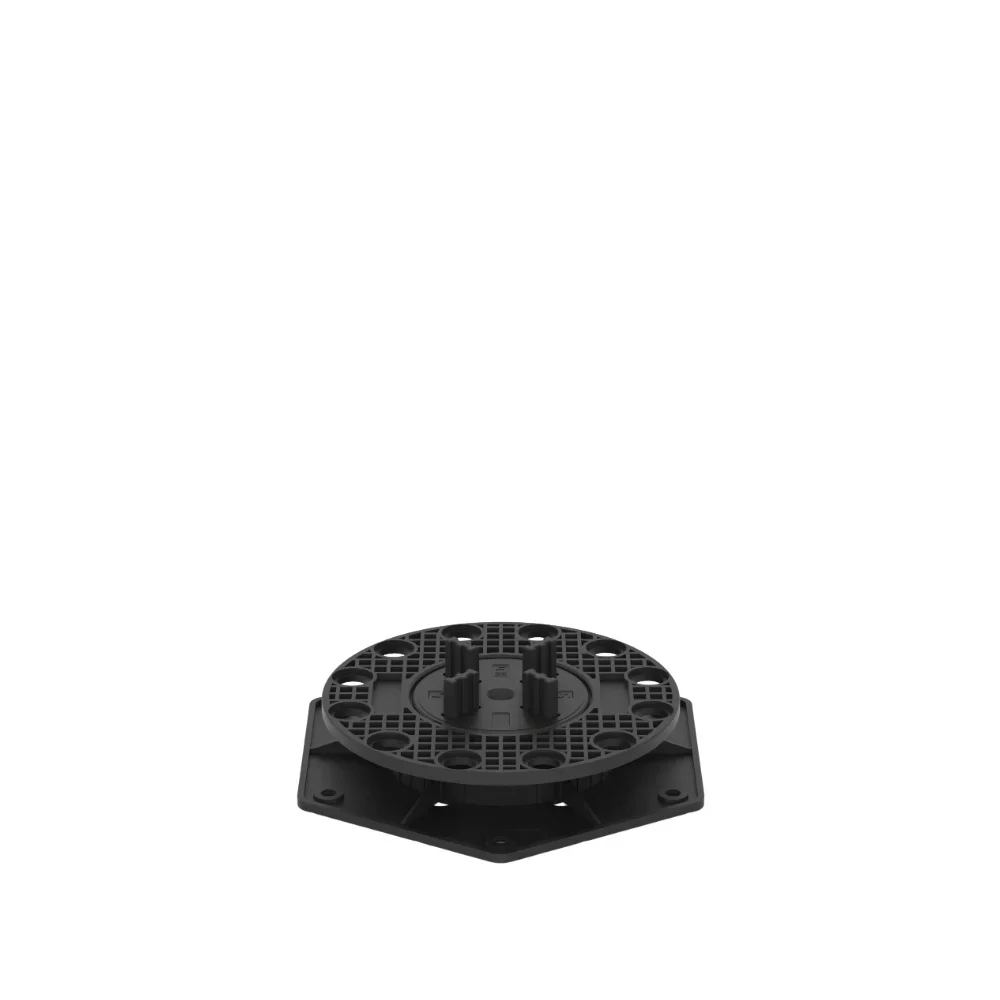
Engineering White Paper: Best Adjustable Pedestal for Decking Load Stability
The Best adjustable pedestal for decking system is a structural elevation technology used in modern architectural flooring systems where traditional substrate leveling is not feasible or economically efficient. In rooftop terraces, landscape plazas, elevated walkways, and modular construction platforms, the pedestal system functions as a controlled vertical load transfer interface that replaces conventional wet-lay leveling methods.
Unlike traditional bonded flooring systems, an adjustable pedestal decking system does not rely on adhesive or permanent substrate modification. Instead, it creates a modular elevation framework that separates structural support, waterproofing protection, drainage management, and surface finishing into independent functional layers. This separation is the reason pedestal systems have become the dominant solution in rooftop and elevated landscape engineering.
Homedin Industrial Co., Ltd. focuses on universal overhead support systems including stone supports, keel supports, floor supports, and water feature support systems. Its engineering scope covers garden landscapes, rooftop gardens, elevated plazas, prefabricated building platforms, balcony systems, and architectural modular decking structures.
Structural Engineering Principle of Adjustable Pedestal Decking System
The fundamental engineering principle behind an adjustable pedestal system is vertical load transmission through discrete support points while maintaining global surface planarity through controlled height variation.
In practical structural behavior terms, each pedestal acts as an independent load-bearing column. However, when distributed across a grid system, these columns collectively form a distributed load-bearing plane. The decking surface placed above this system behaves like a continuous structural membrane supported by multiple point supports.
The key engineering objective is not simply supporting weight, but controlling how that weight is transferred through multiple load paths to prevent:
Localized stress concentration
Uneven settlement under long-term load
Structural misalignment due to substrate irregularities
Drainage failure caused by inconsistent elevation geometry
In rooftop environments, these failure modes are significantly amplified due to waterproof membrane sensitivity and thermal expansion cycles.
Load Transfer Mechanism and Structural Stress Distribution Behavior
In a properly engineered adjustable pedestal decking system, load transfer follows a strictly vertical path:
Decking surface → pedestal head → threaded or locked adjustment core → base disc → substrate
Each interface plays a specific structural role in controlling stress distribution.
Engineering behavior of load transfer stages
The pedestal head distributes point loads from stone or composite decking materials into a wider structural interface, reducing local stress peaks at contact points. The central shaft or threaded core maintains vertical alignment and prevents eccentric loading conditions that could introduce bending stress. The base disc then converts concentrated axial loads into distributed surface pressure, reducing risk of substrate penetration or membrane deformation.
This multi-stage load transformation is critical in rooftop applications where waterproofing layers cannot tolerate localized point loading.
Height Adjustment System and Structural Calibration Logic
The adjustable pedestal for decking system relies on controlled vertical calibration mechanisms to compensate for uneven substrates and architectural slope requirements.
There are two dominant engineering configurations:
Threaded continuous adjustment systems
Modular stacked height systems
Threaded systems allow continuous micro-adjustment, which is critical in drainage slope formation where millimeter-level elevation control determines water flow behavior. Modular systems, while faster in installation, rely on discrete height increments that may require combination stacking to achieve precise slope geometry.
However, height adjustment alone is not sufficient. The critical engineering requirement is height locking stability under long-term compressive load.
Without stable locking behavior, micro-movements occur due to:
Thermal expansion and contraction cycles
Repeated pedestrian load vibration
Material creep under sustained compression
Wind-induced structural micro-vibration in elevated platforms
These micro-movements accumulate over time and result in surface leveling failure even if initial installation precision is correct.
Structural Load Path Optimization and Stress Reduction Engineering
A key advantage of Best adjustable pedestal for decking systems is their ability to optimize load paths compared to traditional continuous bedding systems.
In traditional mortar-based systems, load distribution is semi-continuous but sensitive to cracking and substrate separation. In contrast, pedestal systems define discrete load points, which reduce uncontrolled stress propagation across the entire surface.
However, this introduces a secondary engineering requirement: ensuring that each load point behaves consistently under variable loading conditions.
To address this, pedestal systems must be engineered with:
Uniform stiffness distribution across all support units
Controlled deformation limits under maximum design load
Predictable elastic recovery behavior after load removal
Anti-creep material performance under long-term compression
This ensures that system-wide deformation remains within acceptable tolerances even under uneven load conditions such as furniture placement, pedestrian clustering, or equipment installation on rooftop platforms.
Base Disc Engineering and Substrate Interaction Stability
The base disc is a critical structural interface between pedestal system and substrate layer. Its function is not merely support, but controlled stress dispersion.
In rooftop applications, substrates often include waterproof membranes, insulation layers, or lightweight concrete structures. These materials have limited resistance to concentrated point loads.
Therefore, the base disc must:
Increase contact surface area to reduce pressure per unit area
Maintain friction stability to prevent lateral sliding under load
Compensate for micro-roughness in substrate surfaces
Prevent membrane puncture or long-term indentation failure
Homedin Industrial designs base structures with optimized geometry that balances load dispersion with structural rigidity, ensuring that deformation does not occur under long-term static loading conditions.
Material Engineering for Outdoor Durability and Long-Term Stability
Outdoor pedestal systems are exposed to long-term environmental stress including UV radiation, temperature cycling, moisture infiltration, and freeze-thaw expansion in certain climates.
Material selection directly affects:
Long-term compressive strength retention
Creep resistance under sustained load
Dimensional stability under thermal cycling
Surface degradation resistance under UV exposure
Homedin Industrial utilizes engineered polymer-based structural materials designed specifically for outdoor overhead support systems. These materials maintain mechanical stability under continuous load while resisting environmental degradation that could compromise structural accuracy over time.
Engineering Selection Criteria for Adjustable Pedestal Decking System
For contractors and engineering procurement teams, selection of a pedestal system must be based on structural performance rather than superficial installation characteristics.
Critical evaluation parameters include:
Long-term load stability under continuous compression cycles
Precision of height adjustment under field installation conditions
Locking mechanism resistance to vibration-induced loosening
Structural creep behavior under high-temperature rooftop exposure
Load distribution uniformity across mixed substrate conditions
Each of these parameters directly influences system lifecycle cost, maintenance frequency, and structural safety margin.
Application Engineering in Modern Construction Systems
Adjustable pedestal systems are widely used in modern architectural engineering scenarios where structural flexibility and waterproof integrity must coexist.
Typical applications include rooftop gardens, elevated terraces, commercial plaza flooring systems, stone slab walkways, and prefabricated modular construction platforms.
In these environments, pedestal systems eliminate the need for wet concrete leveling layers, reduce structural load on roof slabs, and allow integrated drainage slope design without modifying primary structural surfaces.
Conclusion
The Best adjustable pedestal for decking system is a structural load management solution designed for modern elevated construction environments where traditional leveling methods are not feasible. Its engineering value lies not in simple height adjustability, but in controlled load transfer behavior, structural stability under long-term compression, and precise geometric calibration across large surface areas.
Through its universal overhead support system technology, Homedin Industrial Co., Ltd. provides engineered pedestal solutions designed for complex outdoor architectural environments requiring high structural reliability, long service life, and consistent load distribution performance under real-world construction conditions.
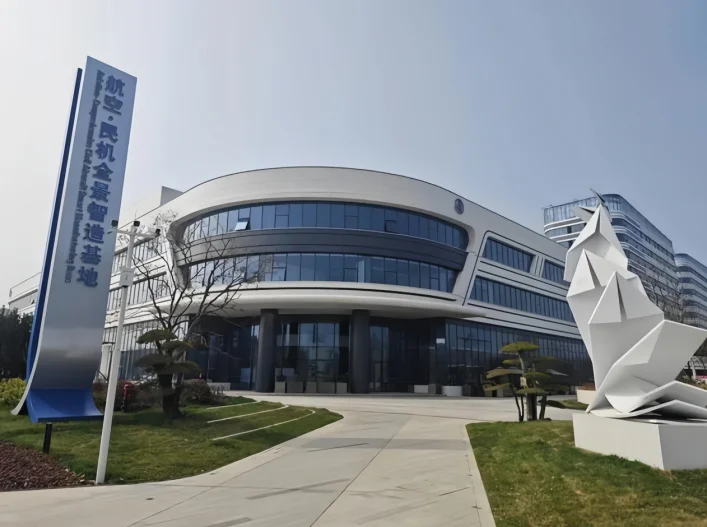
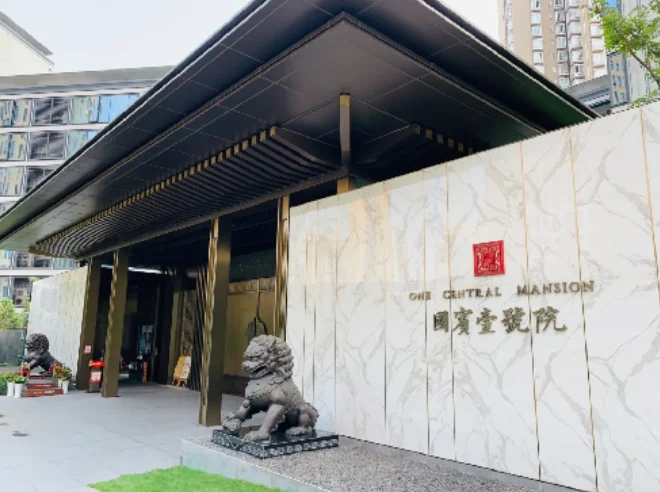
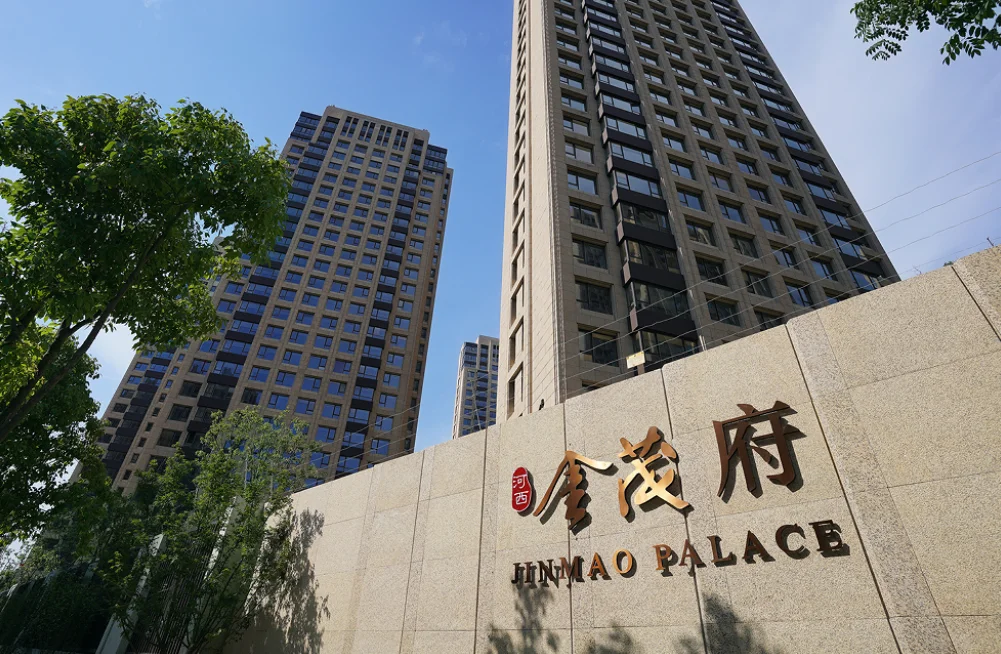

With advanced manufacturing and rigorous quality control, Homedin delivers consistent product quality and responsive after-sales support. We welcome partners worldwide to visit our factory and discuss collaboration.
Frequently Asked Questions
What is an adjustable pedestal used for?
An adjustable pedestal (also called a deck support or paver pedestal) raises tiles, decking boards, timber or stone above the substrate to create a level, ventilated and drained raised floor. Common uses are rooftops, terraces, balconies, plazas and pool decks.
How much weight can an adjustable pedestal support?
HOMEDIN pedestals are SGS load-tested: the HE Series up to 2,000 kg per support, the B Series 2.5–3.5 t, and the S Series rubber shim ≥3,152 kg. Always size by worst-case point load and support spacing.
What height range do adjustable pedestals cover?
Typical pedestals adjust from about 20 mm up to 260–392 mm; extension rings push heights further (B Series to 480 mm, HE Series to 392 mm). Pick the model by your required finished-floor height.
Can adjustable pedestals handle sloped or uneven surfaces?
Yes. Self-leveling heads (HOMEDIN XA rubber / XB plastic) compensate slopes up to 5%, and shim pads level minor irregularities — ideal for retrofit balconies and uneven substrates.
Are HOMEDIN pedestals certified and suitable for outdoor use?
Yes. Bodies are UV-stabilised PP or PP+glass-fibre (TPE/EPDM rubber for the S Series), rated from −30 °C to +120 °C, and verified by SGS, CE, RoHS and REACH.