Clear records
history record

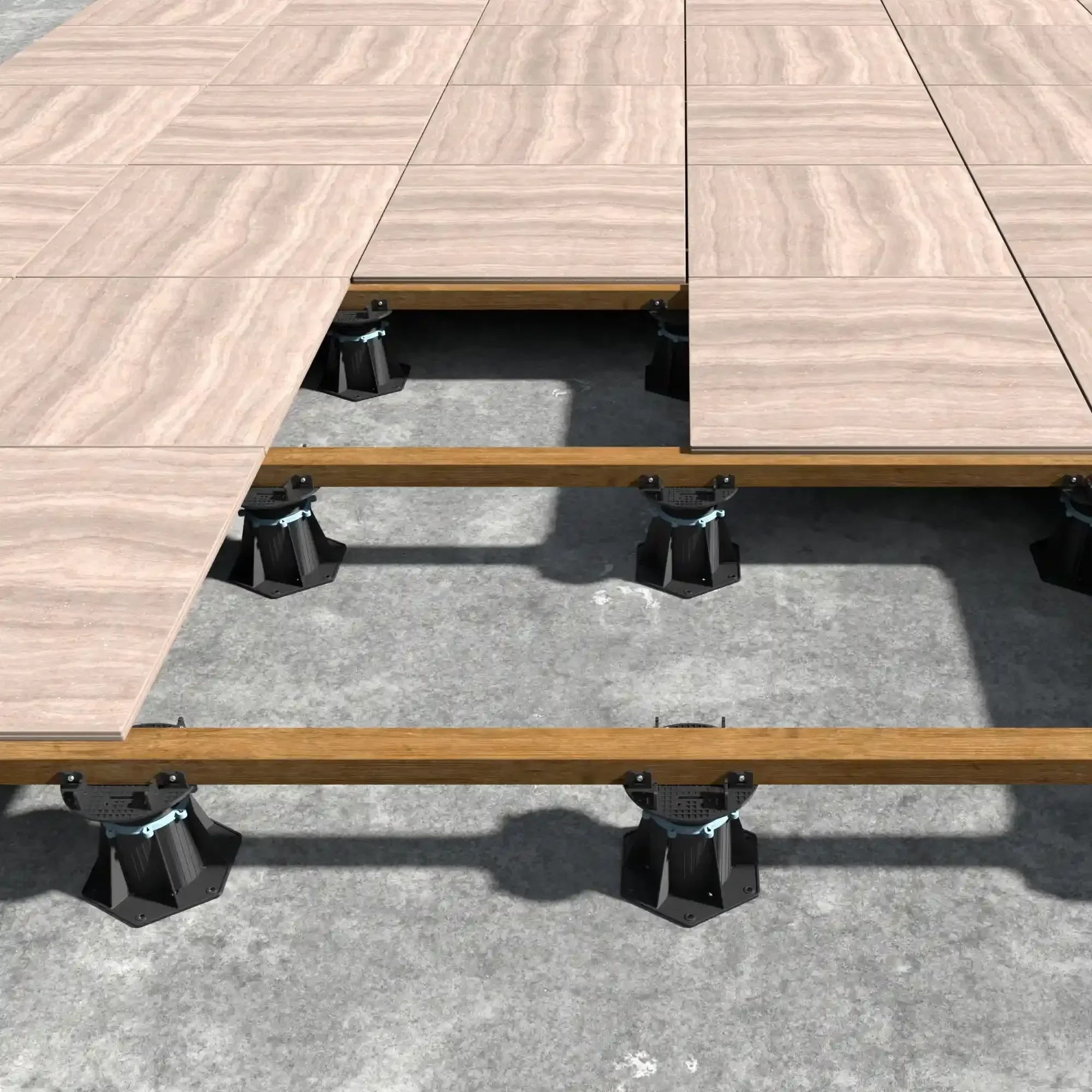
Engineering-Grade Adjustable PP Pedestal Systems for Landscape Flooring
In modern landscape engineering, the structural reliability of elevated flooring systems is no longer determined by surface materials alone. For garden landscape contractors, rooftop garden construction teams, municipal engineering units, architectural façade and raised flooring installers, and high-end commercial space designers, the selection of Best pp pedestal for garden landscaping solutions is fundamentally an engineering decision about long-term load stability, leveling accuracy, drainage performance, and environmental durability.
Unlike traditional paving methods where structural inconsistency can be visually hidden, raised pedestal systems directly define the geometric precision and service life of the entire landscape surface. Any deviation in height stability, load distribution, or material creep will immediately translate into surface unevenness, drainage failure, or structural fatigue.
Therefore, when evaluating PP pedestal for garden landscaping for sale, professional buyers are no longer asking whether the pedestal “can support tiles,” but rather:
Can it maintain millimeter-level leveling accuracy under long-term load?
Can it resist creep deformation under continuous compressive stress?
Can it maintain stability under thermal expansion cycles and UV exposure?
Can it ensure uniform load transfer across large-scale installations?
Can it adapt to uneven substrate conditions without structural compromise?
These are system-level engineering questions, not product-level assumptions.
PP Pedestal as a Structural Load Transfer and Leveling System
A PP pedestal is not simply a spacer. In engineered landscape systems, it functions as a dynamic load transfer and height calibration component.
Each pedestal simultaneously performs three critical functions:
Vertical load bearing from surface materials (stone, ceramic, composite decking)
Horizontal load stabilization under lateral movement and expansion
Height adjustment for slope correction and drainage design
This makes the system a three-dimensional structural regulation mechanism, not a static support element.
High-Strength Modified PP Material: Foundation of Structural Stability
The flagship high quality PP pedestal for garden landscaping is manufactured using high-strength modified polypropylene (PP) engineering material, specifically optimized for outdoor structural applications.
Material engineering characteristics:
1. High Compressive Strength Under Static Load
Maintains structural integrity under continuous heavy slab pressure in rooftop and plaza installations.
2. Creep Resistance Optimization
Reduces long-term deformation under constant load conditions, ensuring stable elevation over time.
3. UV-Resistant Molecular Stabilization
Prevents polymer degradation under prolonged sunlight exposure in outdoor environments.
4. Thermal Expansion Adaptation Behavior
Maintains dimensional stability under extreme temperature cycles (high heat / freezing conditions).
Precision Screw Adjustment System: Millimeter-Level Height Control
One of the defining engineering features of modern pedestal systems is the precision threaded elevation adjustment mechanism.
Functional advantages include:
1. Fine-Resolution Height Calibration
Allows millimeter-level adjustment accuracy for precise surface leveling.
2. Self-Locking Stability Structure
Prevents unintended height changes under vibration or long-term load pressure.
3. Load-Responsive Thread Stability
Maintains consistent elevation even under dynamic pedestrian or equipment load conditions.
4. Fast Installation Alignment Efficiency
Reduces field installation correction time in large-scale projects.
Multi-directional Load Dispersion & Adaptive Leveling System
One of the most critical innovations in modern pedestal engineering is the Multi-directional Load Dispersion & Adaptive Leveling System.
This system is specifically designed to solve a key structural problem in raised flooring systems:
localized stress concentration and uneven load transfer across irregular substrates.
Engineering Challenges in Traditional Pedestal Systems
Without optimized load distribution, traditional systems often suffer from:
localized sinking under heavy stone slabs
uneven load transfer across pedestal grid points
structural instability on uneven base layers
drainage disruption due to uneven elevation distribution
These failures become more severe in:
rooftop garden installations
commercial plaza stone paving systems
water feature landscaping structures
large-scale modular flooring systems
How the Multi-directional Load Dispersion System Works
1. Radial Load Redistribution Mechanism
Distributes vertical load evenly across surrounding pedestal units rather than concentrating force at a single point.
2. Adaptive Base Contact Compensation
Automatically adjusts contact pressure based on substrate irregularities (concrete, sand layer, waterproof membrane).
3. Lateral Stability Reinforcement Behavior
Reduces horizontal displacement under thermal expansion or structural vibration.
4. Integrated Leveling Synchronization
Ensures large-scale surface areas maintain uniform elevation continuity.
Engineering Value in Real Landscape Construction Projects
1. Rooftop Garden Systems
In rooftop applications, structural constraints are critical:
waterproof membrane protection
lightweight load distribution
drainage flow continuity
The pedestal system ensures:
no direct damage to waterproof layers
uniform load transfer across slab grids
stable elevation under wind and temperature fluctuation
2. Commercial Plaza Stone Paving Systems
For high-traffic pedestrian environments:
prevents slab tilting and edge displacement
maintains consistent walking surface geometry
improves long-term maintenance efficiency
3. Water Feature Landscape Structures
In fountain and water-integrated landscapes:
ensures drainage continuity beneath stone layers
prevents water accumulation stress points
maintains stable elevation under moisture exposure
4. Elevated Decking and Raised Flooring Systems
For modular architectural flooring:
supports flexible layout design
enables quick reconfiguration
ensures uniform structural alignment
Environmental Durability Under Outdoor Stress Conditions
Outdoor pedestal systems must perform under:
continuous UV radiation exposure
high humidity and rainfall cycles
freeze-thaw temperature variation
long-term mechanical compression
The modified PP engineering material ensures:
long-term structural integrity retention
minimal deformation under sustained load
stable performance across seasonal changes
reduced maintenance frequency requirements
Manufacturing and Engineering Capability of Homedin Industrial
Homedin Industrial Co.,Ltd. specializes in integrated overhead and structural support systems, including:
stone support systems
floor support systems
keel support systems
water feature support systems
The company provides complete engineering solutions for:
garden landscape projects
rooftop garden systems
raised plazas
dry spray landscape structures
architectural façade systems
prefabricated construction projects
commercial interior elevated flooring
Engineering capability advantages:
1. System-Level Design Approach
Not only product manufacturing, but full structural system engineering support.
2. Project-Based Customization Capability
Supports diverse architectural and landscape design requirements.
3. Technical Support Integration
Provides installation guidance and structural optimization recommendations.
4. Application-Driven Product Development
Products are designed based on real construction scenarios, not generic assumptions.
PP Pedestal for Garden Landscaping for Sale: Industrial Value Perspective
When evaluating PP pedestal for garden landscaping for sale, professional procurement teams focus on system-level performance indicators:
long-term structural deformation resistance
precision leveling repeatability across large areas
load distribution uniformity under heavy slab systems
compatibility with drainage and waterproof systems
installation efficiency in large-scale construction
This transforms procurement from a cost decision into an engineering reliability assessment.
Conclusion: PP Pedestal as a Precision Landscape Structural System
Modern landscape architecture increasingly relies on engineered elevation systems rather than static support materials. The performance of elevated flooring structures depends entirely on the pedestal system’s ability to manage:
load distribution
height precision
drainage coordination
environmental durability
long-term structural stability
Through high-strength modified PP material, precision screw adjustment, and the Multi-directional Load Dispersion & Adaptive Leveling System, modern pedestal systems achieve:
stable long-term structural elevation
consistent surface leveling across large installations
improved drainage system integration
reduced installation error rates
For landscape engineers and construction teams, this means:
higher installation accuracy
lower maintenance cost
longer structural lifecycle
improved system reliability under real environmental conditions
In modern landscape engineering, the pedestal is no longer a simple accessory—it is the core structural intelligence layer that determines the performance of the entire elevated flooring system.
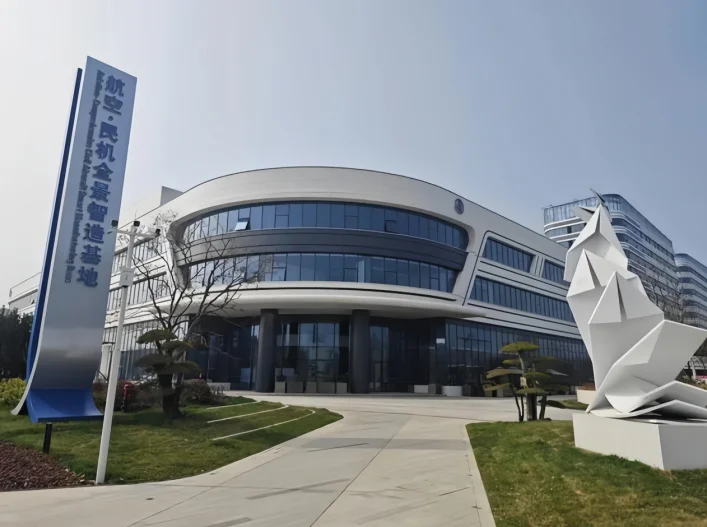
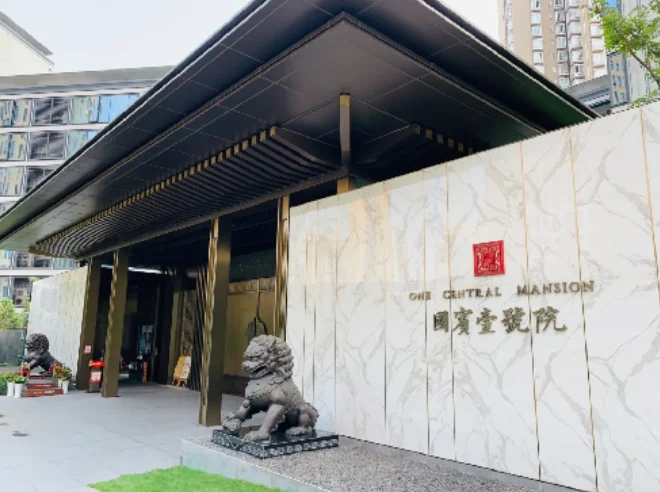

With advanced manufacturing and rigorous quality control, Homedin delivers consistent product quality and responsive after-sales support. We welcome partners worldwide to visit our factory and discuss collaboration.
Frequently Asked Questions
What is an adjustable pedestal used for?
An adjustable pedestal (also called a deck support or paver pedestal) raises tiles, decking boards, timber or stone above the substrate to create a level, ventilated and drained raised floor. Common uses are rooftops, terraces, balconies, plazas and pool decks.
How much weight can an adjustable pedestal support?
HOMEDIN pedestals are SGS load-tested: the HE Series up to 2,000 kg per support, the B Series 2.5–3.5 t, and the S Series rubber shim ≥3,152 kg. Always size by worst-case point load and support spacing.
What height range do adjustable pedestals cover?
Typical pedestals adjust from about 20 mm up to 260–392 mm; extension rings push heights further (B Series to 480 mm, HE Series to 392 mm). Pick the model by your required finished-floor height.
Can adjustable pedestals handle sloped or uneven surfaces?
Yes. Self-leveling heads (HOMEDIN XA rubber / XB plastic) compensate slopes up to 5%, and shim pads level minor irregularities — ideal for retrofit balconies and uneven substrates.
Are HOMEDIN pedestals certified and suitable for outdoor use?
Yes. Bodies are UV-stabilised PP or PP+glass-fibre (TPE/EPDM rubber for the S Series), rated from −30 °C to +120 °C, and verified by SGS, CE, RoHS and REACH.