Clear records
history record

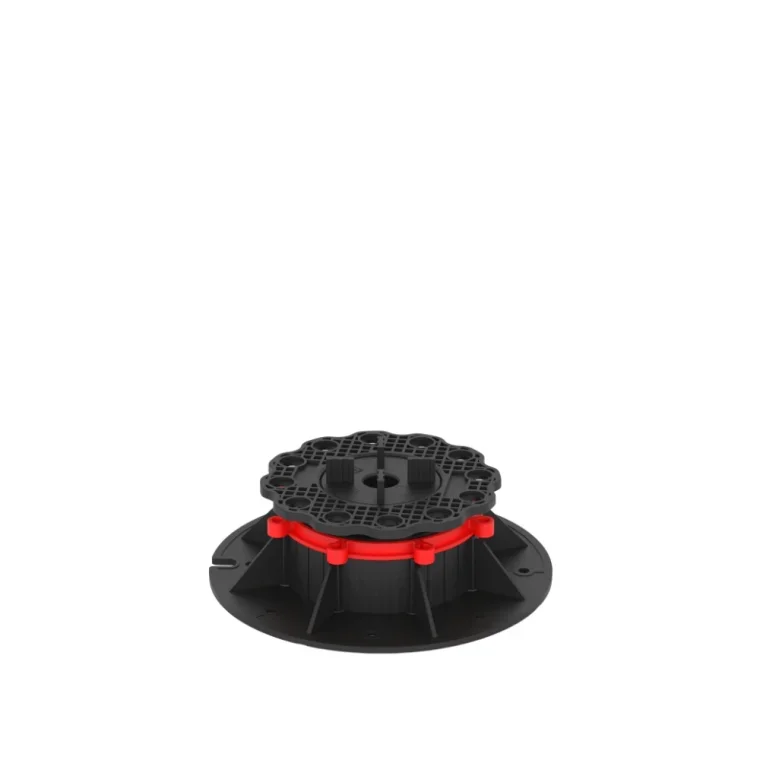
Wooden paving pedestal china and Engineering Guide to High-Stability Paving Support Systems for Long-Term Outdoor Load Control
When architects, landscape contractors, and procurement engineers search for Wooden paving pedestal china or evaluate options from a paving pedestal china supplier, the real engineering concern is rarely about whether the pedestal can “support a deck.” The real requirement is far more technical: whether the pedestal system can maintain load stability, height accuracy, and structural integrity under long-term outdoor environmental stress and repeated mechanical loading cycles.
In modern raised flooring systems—especially rooftop terraces, landscape plazas, and modular decking structures—the paving pedestal is not a passive spacer. It is a precision load distribution and leveling control component that directly determines the performance of the entire surface system.
Failure in pedestal stability does not just affect aesthetics. It leads to:
surface unevenness and tile displacement
structural stress concentration in decking boards
water drainage disruption in rooftop systems
accelerated material fatigue in wood or stone layers
long-term maintenance cost escalation
This is why professional-grade pedestal systems must be engineered as structural load balancing devices with long-term environmental resistance, not simple adjustable supports.
Homedin Industrial Co., Ltd. is a specialized provider of comprehensive overhead support system solutions, focusing on the research, production, and technical service of stone supports, floor supports, keel supports, and water feature support systems. The company delivers engineered solutions for landscape architecture, rooftop gardens, elevated plazas, prefabricated buildings, balcony systems, and decorative structural applications.
Unlike general construction accessories, Homedin’s product philosophy focuses on system-level structural stability rather than isolated component performance.
Understanding Wooden paving pedestal china in Structural Engineering Terms
To properly evaluate Wooden paving pedestal china, it is essential to move beyond product-level thinking and instead analyze it as part of a modular load-bearing leveling system.
A paving pedestal performs three critical engineering functions:
1. Vertical load transmission
Transfers surface loads (wood, stone, tile systems) evenly to the structural base layer.
2. Height adjustment and leveling control
Ensures precise elevation correction across uneven substrate surfaces.
3. Load redistribution
Prevents localized stress concentration by dispersing pressure across multiple support points.
In real-world applications, these functions must remain stable under:
long-term static loads
thermal expansion cycles
freeze-thaw environmental conditions
moisture absorption and drainage cycles
UV exposure degradation
Without proper engineering design, pedestals can gradually lose height accuracy or structural rigidity, leading to surface deformation.
Why paving pedestal china supplier Selection is a Structural System Decision
Selecting a paving pedestal china supplier is not a procurement decision limited to cost or supply availability. It is a structural reliability decision for the entire elevated flooring system.
Common failure modes in low-quality pedestal systems include:
thread deformation under long-term load
base plate sinking due to uneven pressure distribution
plastic aging caused by UV exposure
instability under temperature expansion cycles
inconsistent height adjustment under vibration or load shifts
These failures directly affect:
rooftop waterproofing performance
stone or wood surface alignment
drainage slope consistency
structural safety over long-term operation
Therefore, engineering-grade selection must focus on material science, load distribution behavior, and long-term mechanical stability.
Core Engineering Structure of Homedin Paving Pedestal System
The Homedin paving pedestal system is built on three integrated engineering layers:
High-strength modified polymer structural base system
Precision mechanical height adjustment system
Multi-point load distribution and self-locking stabilization architecture
Each layer addresses a specific mechanical failure risk in outdoor elevated flooring systems.
High-strength modified PP engineering material system
The pedestal body is manufactured using high-strength modified polypropylene (PP) engineering plastic, designed for long-term structural stability under outdoor conditions.
Material performance advantages:
high compressive strength retention under long-term static load
excellent creep resistance under continuous pressure
improved dimensional stability under thermal cycling
enhanced environmental stress cracking resistance
This material selection ensures that the pedestal maintains structural integrity even after years of exposure to:
direct sunlight
rainfall and humidity
freeze-thaw cycles
temperature fluctuation stress
Precision threaded height adjustment system
The core leveling mechanism is based on a high-precision threaded adjustment structure, designed for controlled vertical positioning.
Engineering functions:
fine-tuned height correction capability
stable load-bearing under threaded engagement
anti-slip locking under vibration and load variation
This system ensures that once adjusted, the pedestal maintains consistent elevation without gradual downward drift.
Reinforced base load distribution system
The bottom structural base is engineered to distribute vertical load evenly across the substrate surface.
Structural benefits:
reduced point-load concentration on waterproof membranes
improved ground contact stability
minimized substrate deformation risk
This is particularly important in rooftop applications where membrane protection is critical.
Multi-point Pressure Distribution Self-Locking Leveling Design
One of the most advanced engineering features of Homedin pedestal systems is the multi-point pressure distribution self-locking leveling structure.
This system is designed to solve one of the most common structural failures in elevated flooring: uneven load settlement over time.
Multi-point force dispersion mechanism
Instead of transmitting load through a single vertical axis, the system distributes force across multiple internal contact zones.
This results in:
reduced localized stress concentration
improved long-term dimensional stability
minimized deformation under repeated load cycles
Self-locking structural stability behavior
Once the pedestal is adjusted to the required height, the internal locking mechanism stabilizes the threaded system to prevent:
gradual rotation under load vibration
unintended height reduction
structural loosening over time
Long-term leveling accuracy retention
The system maintains consistent elevation alignment across:
wooden decking systems
ceramic tile terrace systems
stone paving platforms
This ensures long-term surface flatness and installation integrity.
UV-resistant material formulation and outdoor aging resistance
Outdoor pedestal systems must resist continuous environmental degradation.
Homedin’s modified PP formulation includes:
UV-stabilized polymer additives
anti-aging molecular structure reinforcement
enhanced oxidation resistance compounds
Engineering impact:
delayed material embrittlement
reduced surface cracking under sunlight exposure
extended structural service life
This is critical for rooftop and open-air plaza systems where UV exposure is continuous and intense.
Modular height adjustment system for multi-application engineering
The pedestal system is designed with a modular height adjustment architecture, supporting different installation requirements.
Height adjustment flexibility
Supports precise elevation control across different construction needs, including:
rooftop drainage slope systems
elevated wooden decking platforms
stone paving leveling systems
ceramic tile terrace installations
Fast adaptation across project types
The same system architecture can be configured for:
residential rooftop gardens
commercial plaza flooring systems
landscape water feature platforms
prefabricated modular building floors
Application engineering scenarios
1. Wooden decking systems
Provides stable support for timber structures while preventing:
board warping
uneven load distribution
moisture-related deformation
2. Stone paving systems
Ensures precise leveling for heavy stone loads, reducing:
cracking risk
edge displacement
uneven settlement
3. Rooftop terrace systems
Maintains waterproof membrane integrity by:
reducing point load stress
enabling drainage slope consistency
preventing membrane puncture
4. Landscape and water feature systems
Provides stable structural base for:
fountain platforms
dry landscape installations
elevated garden structures
Engineering quality control and manufacturing capability
Homedin Industrial integrates:
full production system for support overhead structures
stone, floor, keel, and water feature support product lines
engineering design + production + technical service integration
The company applies:
strict dimensional control standards
structural load testing validation
material consistency inspection systems
This ensures each pedestal batch maintains:
uniform load-bearing performance
consistent adjustment precision
long-term structural reliability
Engineering selection criteria for buyers
When evaluating paving pedestal china supplier systems, procurement teams should focus on:
Load stability performance
Ability to maintain structural integrity under long-term static and dynamic loads.
Height adjustment precision
Accuracy and stability of leveling under installation and long-term use.
Environmental resistance
UV, moisture, and temperature cycle resistance capability.
Load distribution efficiency
Ability to prevent point-load concentration and substrate damage.
Long-term deformation control
Resistance to creep, settling, and material fatigue.
Conclusion
In modern elevated flooring systems, Wooden paving pedestal china solutions are no longer simple adjustable supports—they are precision structural leveling systems responsible for maintaining long-term surface integrity under complex environmental and mechanical conditions.
When properly engineered, a paving pedestal china supplier must deliver more than components; it must deliver a stable load distribution and long-term leveling control system.
Homedin Industrial achieves this through:
high-strength modified PP engineering materials
precision threaded height adjustment mechanisms
multi-point pressure distribution self-locking structures
UV-resistant anti-aging formulations
modular configuration for multi-application environments
These engineering systems ensure long-term structural stability, precise leveling retention, and reliable performance across wooden decking, stone paving, and rooftop architectural systems under demanding outdoor conditions.

With advanced manufacturing and rigorous quality control, Homedin delivers consistent product quality and responsive after-sales support. We welcome partners worldwide to visit our factory and discuss collaboration.
Frequently Asked Questions
What is an adjustable pedestal used for?
An adjustable pedestal (also called a deck support or paver pedestal) raises tiles, decking boards, timber or stone above the substrate to create a level, ventilated and drained raised floor. Common uses are rooftops, terraces, balconies, plazas and pool decks.
How much weight can an adjustable pedestal support?
HOMEDIN pedestals are SGS load-tested: the HE Series up to 2,000 kg per support, the B Series 2.5–3.5 t, and the S Series rubber shim ≥3,152 kg. Always size by worst-case point load and support spacing.
What height range do adjustable pedestals cover?
Typical pedestals adjust from about 20 mm up to 260–392 mm; extension rings push heights further (B Series to 480 mm, HE Series to 392 mm). Pick the model by your required finished-floor height.
Can adjustable pedestals handle sloped or uneven surfaces?
Yes. Self-leveling heads (HOMEDIN XA rubber / XB plastic) compensate slopes up to 5%, and shim pads level minor irregularities — ideal for retrofit balconies and uneven substrates.
Are HOMEDIN pedestals certified and suitable for outdoor use?
Yes. Bodies are UV-stabilised PP or PP+glass-fibre (TPE/EPDM rubber for the S Series), rated from −30 °C to +120 °C, and verified by SGS, CE, RoHS and REACH.